Education and Training: Degrees, Timelines, and Costs
The educational path you choose in sports psychology depends largely on whether you want to diagnose and treat mental health conditions or focus on mental skills training and performance optimization. Each track requires a different degree, a different time investment, and a different financial commitment. Here is what to expect as you plan your route.
Clinical Track: Doctoral Programs
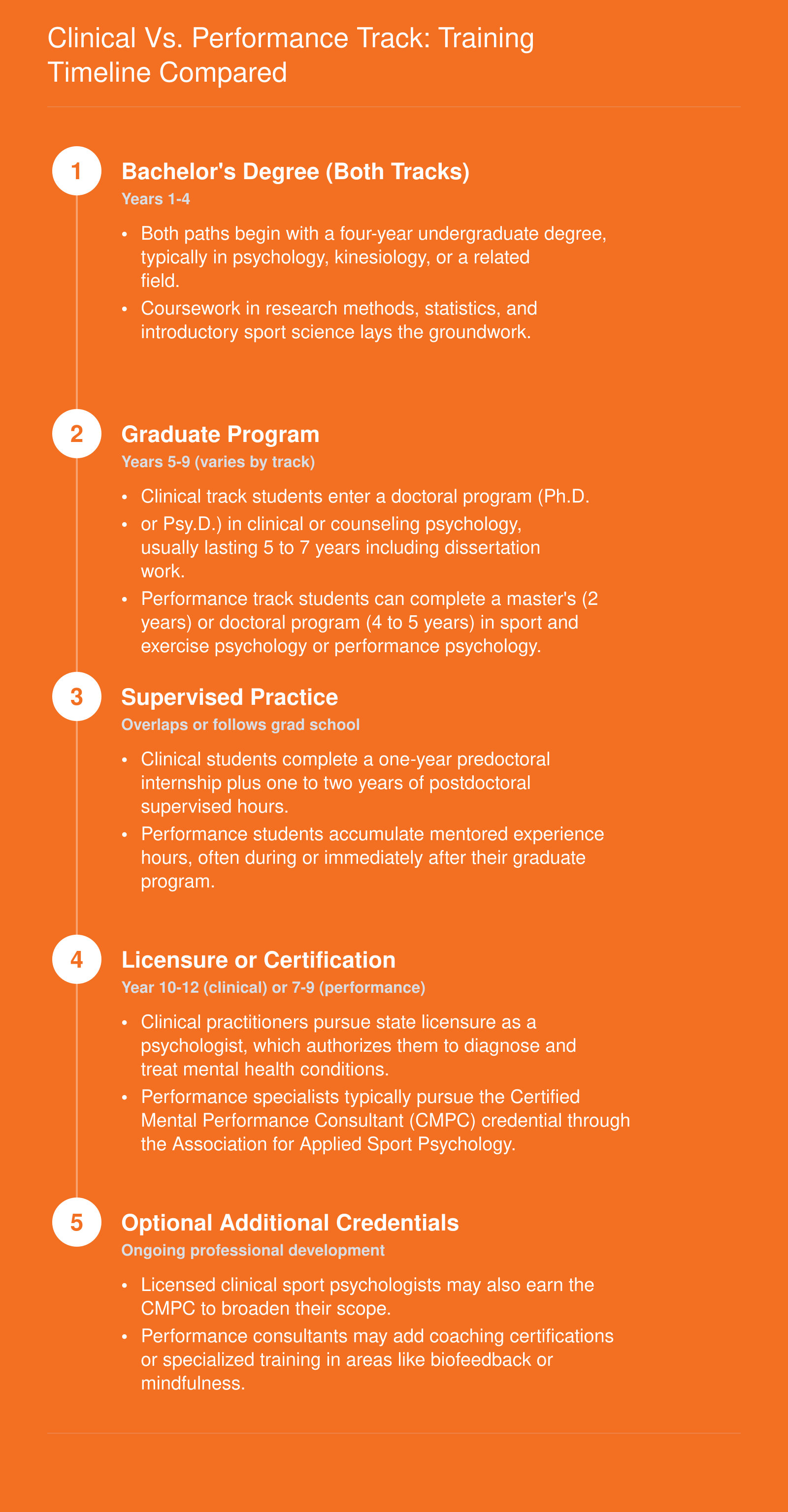
Becoming a clinical sport psychologist typically requires a doctoral degree, either a PhD or a PsyD, in clinical or counseling psychology. These programs generally take five to seven years to complete, including a one-year predoctoral internship and additional postdoctoral supervised hours. Students who pursue sport psychology within a clinical doctoral program often complete specialized coursework or a concentration in sport and exercise psychology alongside their core clinical training.
Tuition for APA-accredited doctoral programs varies widely. Funded PhD programs at research universities may cover full tuition and offer annual stipends, often in the range of $20,000 to $30,000 per year. PsyD programs, which are frequently housed at professional schools, tend to carry higher out-of-pocket costs, with total tuition sometimes exceeding $150,000 over four to five years. Funding packages differ significantly from one institution to the next, so reviewing each program's financial aid and assistantship information directly on its website is essential.
You can verify a program's accreditation status through the American Psychological Association's website, which maintains a searchable directory of accredited doctoral programs in clinical and counseling psychology.
Performance Track: Master's Programs
If your goal is to work as a mental performance consultant rather than a licensed psychologist, a master's degree in sport and exercise psychology or a closely related field is the standard entry point. These programs typically run two to three years and prepare you to pursue the Certified Mental Performance Consultant (CMPC) credential through the Association for Applied Sport Psychology. Joining sports psychology organizations early in your graduate training can help you build connections and stay informed about credentialing requirements.
Tuition for master's programs in sport and exercise psychology tends to range from roughly $15,000 to $60,000 in total, depending on whether the institution is public or private and whether you qualify for a graduate assistantship. Some programs offer assistantships that include tuition waivers and modest stipends, particularly at larger state universities. A growing number of programs also offer online or low-residency formats, which can reduce costs and increase flexibility for working professionals or those who cannot relocate. Because program offerings, delivery formats, and tuition rates change frequently, always confirm details directly through the program's website or through graduate school directories.
Funding Resources and Cost Research
Before committing to a program, take these steps to understand the full financial picture:
- APA program directory: Search for accredited doctoral programs and review each program's funding structure, including whether it offers tuition remission or stipends.
- AASP resources: The Association for Applied Sport Psychology maintains a graduate program directory for sport and exercise psychology, which can help you compare master's and doctoral options side by side.
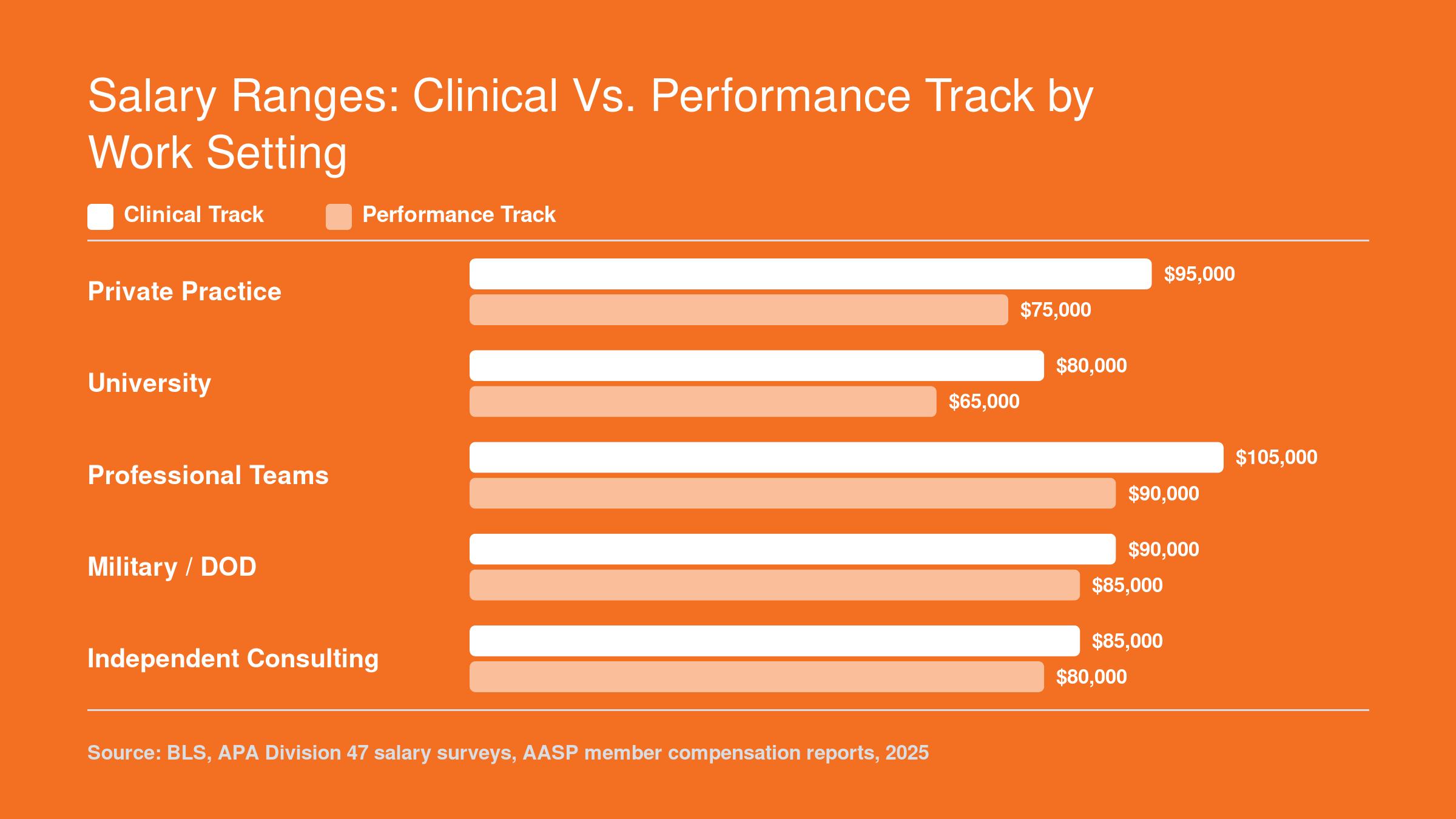
- BLS.gov: The Bureau of Labor Statistics publishes employment projections and general salary data for psychologists, which can help you weigh the cost of your degree against expected earning potential after graduation.
- Program websites: Contact admissions offices directly to ask about assistantships, scholarships, and typical student debt loads at graduation.
Weighing Cost Against Career Flexibility
The clinical doctoral path costs more in both time and money, but it opens the door to a broader scope of practice, including the ability to treat clinical conditions like anxiety, depression, and eating disorders alongside performance work. The master's-level performance track is shorter and often less expensive, making it an appealing option if you are confident that mental skills training is where you want to build your career. Neither path is inherently better; the right choice depends on how you want to serve athletes and what kind of professional identity you envision for yourself.
For program-specific tuition figures, funding availability, and the latest accreditation details, sportspsychology.org recommends visiting individual program websites and the directories maintained by APA and AASP. Data in this space changes frequently, so verifying directly will always give you the most accurate and current information.