Career Paths With a Master's in Sports Psychology
A master's degree opens the door to a wider range of sports psychology roles than many aspiring professionals realize. While the title "psychologist" is typically reserved for doctoral-level practitioners under most state licensing laws, master's-level professionals can build meaningful, well-compensated careers using alternative titles that accurately reflect their scope of work.1 Below are seven concrete roles worth exploring, along with the credentials and employer types you can expect for each.
Mental Performance Consultant
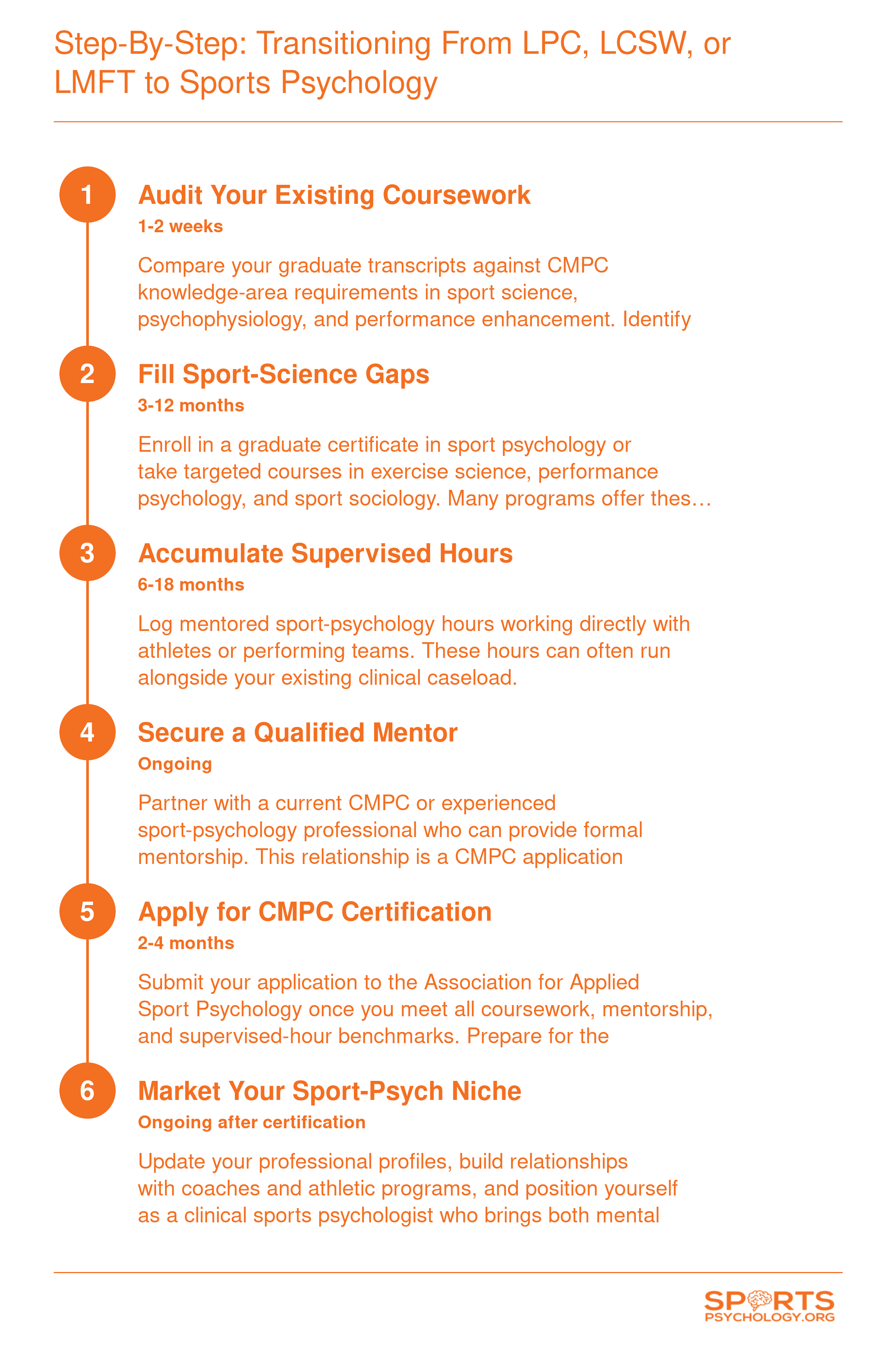
This is the flagship role for master's-level graduates trained in sport and performance psychology. Mental performance consultants work with athletes on goal setting, focus, pre-competition routines, and resilience. They are employed by collegiate athletic departments, professional sports organizations, high-performance academies, and private practices.2 The Certified Mental Performance Consultant (CMPC) credential is the industry standard for this role, and many employers list it as required or strongly preferred.
Athletics Mental Health Counselor
University counseling centers increasingly embed licensed therapists within athletic departments to address clinical concerns such as anxiety, depression, disordered eating, and identity transitions. A master's in counseling, clinical psychology, or social work qualifies you for these positions, provided you hold a state license (LPC, LMHC, or LCSW).3 CMPC certification is not required but can strengthen your candidacy.
Athletic Department Wellness Coordinator
Some NCAA Division I and II programs have created administrative roles, sometimes titled Associate Athletic Director for Sports Psychology or Student-Athlete Wellness Director, that blend program management with direct service. A master's degree is the typical minimum, and the credential mix varies: some postings emphasize state licensure, others value CMPC, and a few accept either. These positions are highly competitive, with a limited number of openings each hiring cycle.
Rehabilitation Sport Counselor
Hospitals, rehabilitation clinics, and sports medicine practices hire master's-level professionals to help patients manage the psychological side of injury recovery. State licensure is generally expected because these roles often involve clinical work with diagnosable conditions. Experience in sport settings gives you a clear edge.
Private Practice Sport and Performance Counselor
Private practice carries lower barriers to entry than institutional roles, but it demands business development skills: marketing, referral networking, niche branding, and insurance navigation. Depending on your state, you will need licensure to provide therapy and may pursue CMPC to offer performance consulting. Many practitioners hold both credentials and serve a mixed caseload of clinical and performance clients.
Corporate and Military Performance Consultant
Military installations, hospitals, and sports psychology in corporate wellness programs hire sport psychology providers at the master's level for roles focused on resilience training, stress inoculation, and peak performance.3 These positions may not require state licensure if the work is non-clinical in nature, though CMPC eligibility is commonly expected. Non-profit organizations also hire for similar roles.
Instructor or Lecturer in Sport Psychology
Community colleges and some four-year institutions hire master's-level professionals to teach undergraduate sport psychology courses.5 These positions are often part-time or adjunct, making them a useful complement to a consulting practice rather than a standalone career path.
A Note on Competition and Titles
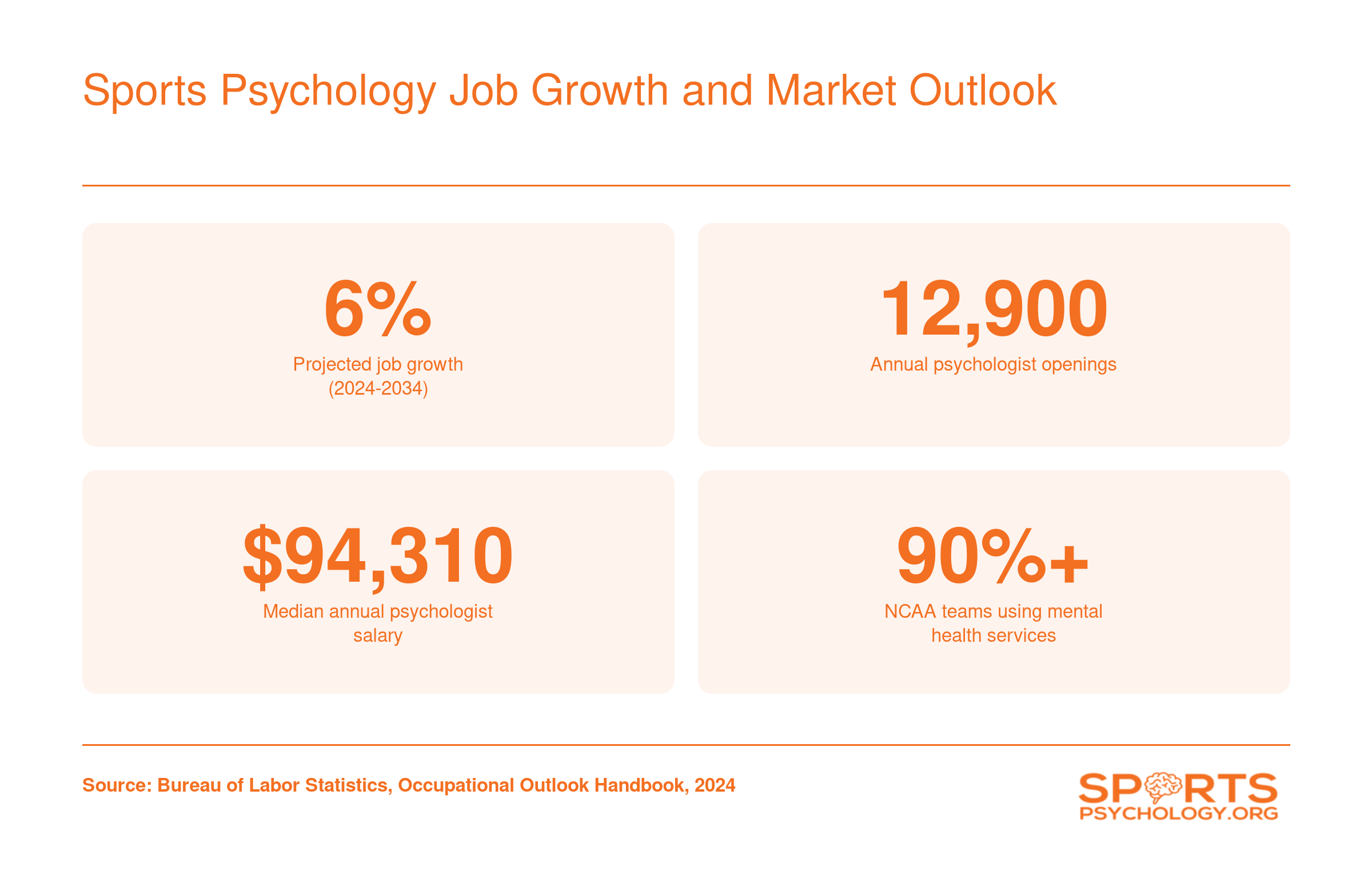
Job market competitiveness varies sharply by setting. Collegiate positions at well-funded Division I programs attract dozens of applicants, while private practice allows you to carve out your own niche with less gatekeeping. Regardless of setting, be intentional about the title you use. Terms like "mental performance consultant," "sport counselor," or "performance coach" are appropriate at the master's level. Calling yourself a "sports psychologist" without a doctorate can create legal and ethical issues in most states.
The AASP Career Center is a valuable resource for monitoring current openings across these categories. Checking it regularly will give you a realistic sense of which roles are hiring, what credentials employers prioritize, and where geographic demand is strongest.