Step-By-Step Education Requirements for Sports Psychologists
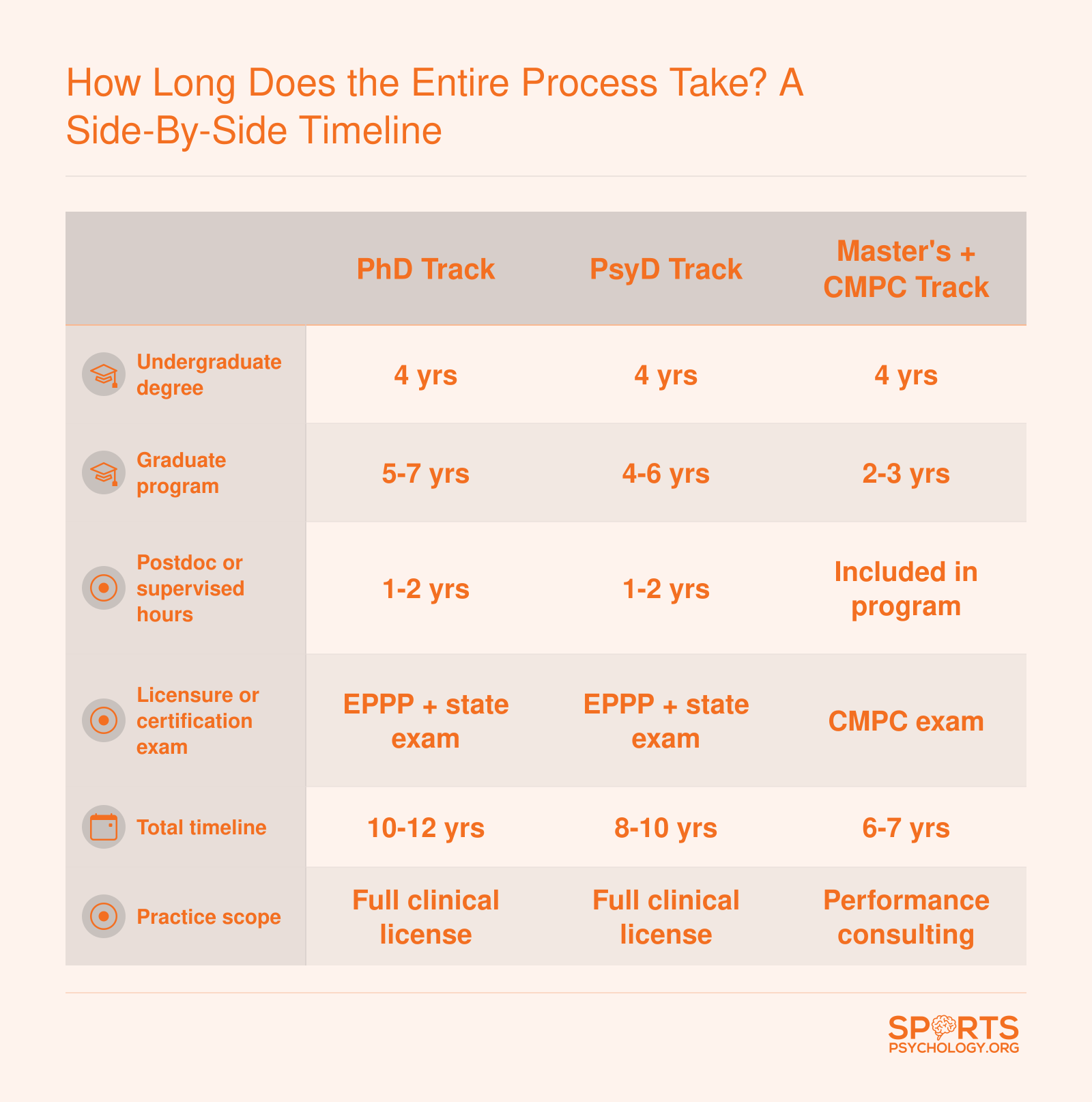
The path to becoming a sports psychologist is a multi-stage commitment that can stretch anywhere from six to fourteen years beyond high school, depending on whether you pursue the doctoral licensure track or the master's-level Certified Mental Performance Consultant (CMPC) route. Here is what each stage looks like and what you should plan for.
Stage 1: Earn a Bachelor's Degree (4 Years)
Most aspiring sports psychologists start with a bachelor's degree in psychology, kinesiology, exercise science, or a closely related field. This four-year foundation gives you coursework in human behavior, research methods, and the biological bases of performance. If you already hold a degree in coaching, athletic training, or general clinical psychology, you are not starting over. Pivoting from adjacent fields is common and often welcomed by graduate admissions committees. You may, however, need to complete prerequisite courses in statistics, abnormal psychology, or sport and exercise psychology before moving to the next stage.
Stage 2: Complete a Master's Degree (2 to 3 Years)
A master's degree in sport psychology, counseling psychology, or a related concentration is the next milestone. Programs typically run two to three years and combine coursework in performance enhancement, clinical or counseling skills, and supervised practicum hours with athletes or performing populations.
If you are planning to pursue the CMPC credential through the Association for Applied Sport Psychology (AASP), this is where your formal classroom education can end. Instead of continuing to a doctorate, you would accumulate mentored hours under a qualified professional and meet additional AASP requirements to earn the CMPC designation. This route lets you work as a mental performance consultant more quickly, though it does not qualify you for the title "psychologist" or for independent clinical licensure in most states.
Stage 3: Pursue a Doctoral Degree for the Licensure Track (4 to 7 Years)
If your goal is to become a licensed psychologist who can diagnose and treat clinical conditions alongside performance work, a doctoral degree is required. You can choose between a PhD, which emphasizes research and typically includes a dissertation, or a PsyD, which leans more heavily toward clinical practice.
APA-accredited doctoral programs are preferred for licensure and are significantly more competitive. Sport psychology doctoral programs in general have low acceptance rates, sometimes in the single digits, because the field attracts a large applicant pool relative to available seats. Strong research experience, relevant practicum hours, and clear statements of purpose go a long way in standing out. Expect this stage to take four to seven years depending on program structure, dissertation timeline, and whether you enter with a master's degree already in hand.
Stage 4: Complete Post-Doctoral Supervised Hours (1 to 2 Years)
After earning your doctorate, most states require one to two years of supervised professional experience before you can sit for the Examination for Professional Practice in Psychology (EPPP) and obtain your license. These hours are typically completed in clinical settings, university counseling centers, or sports medicine facilities. The supervision requirement ensures you can apply your training independently and ethically before practicing on your own.
Quick Summary of Both Tracks
- Licensed psychologist route: Bachelor's (4 years) plus master's (2 to 3 years) plus doctorate (4 to 7 years) plus post-doctoral supervision (1 to 2 years). Total: roughly 11 to 16 years.
- CMPC route: Bachelor's (4 years) plus master's (2 to 3 years) plus AASP mentored hours (varies). Total: roughly 6 to 8 years before credentialing.
Whichever path you choose, know that pivoting is part of the culture in this field. Many successful sports psychologists began as athletes, coaches, or general psychology students before discovering their niche. Graduate programs value diverse backgrounds, so an unconventional starting point can actually be an asset rather than a setback.