Performance psychology extends beyond athletes to military, corporate, and performing arts settings.
CMPC certification requires a master's degree plus mentored consulting hours.
Doctoral licensure unlocks insurance billing and a six-figure salary ceiling.
The U.S. Bureau of Labor Statistics projects a 10% increase in demand for psychologists through 2032, but the fastest-expanding opportunities sit outside traditional clinical practice. Performance psychology now supplies mental skills coaching to corporate leadership teams, military units, and performing artists, a growth that has pulled the field well beyond the locker room. Unlike clinical sport psychologists, performance psychology practitioners do not diagnose or treat mental health disorders; they apply evidence-based techniques to optimize focus, resilience, and execution under pressure. The result is a field with two distinct credentialing pathways: CMPC certification for applied consulting and clinical licensure for therapy-bound roles, each shaping who you can serve and how you get paid.
Best Fully Online Performance Psychology Programs for 2027
Fully online performance psychology programs let you train from anywhere without sacrificing applied experience. The seven schools below each offer 100% distance-based master's options, from sport psychology and kinesiology degrees to programs specifically in sport and performance psychology. Read on for the details that separate them: curriculum focus, certification alignment, admissions, and cost.
How we ranked these
Factors considered
First-year retention rates
Tuition adjusted for local costs
Practitioner-ready program design
Institutional outcome signals
Data sources
BEA Regional Price Parities (state cost of living) — bea.gov
U.S. Department of Education College Scorecard (earnings and debt) — collegescorecard.ed.gov
In-house program catalog data
Independent editorial research
Federal institutional data (NCES-IPEDS) — nces.ed.gov
Northern Michigan University
#1
Marquette, MI · $12,000 – $16,000/yr (est.)
Best for: Working professionals seeking certification and licensure pathways
Northern Michigan University offers an online Master of Science in Applied Sport Psychology through its School of Health and Human Performance. Courses are delivered asynchronously, making the program workable for active coaches, athletes, and other professionals. Students can choose a track leading to mental performance consultant certification or one leading to Michigan licensure as a limited psychologist, so the degree can support either consulting-focused or more clinically oriented practice.
Master of Science degree in applied sport psychology
Fully online and asynchronous delivery
Two tracks: mental performance consultant certification or limited psychologist licensure
Core curriculum with specialized tracks
Flexible scheduling for working coaches and athletes
Offered through the School of Health and Human Performance
Best for: Aspiring consultants wanting supervised practice hours
University of Western States delivers a fully online, asynchronous Master of Science in Sport and Performance Psychology built for working adults. The curriculum covers sport psychology theory, mental skills training, multicultural counseling, and research methods, and the core coursework aligns with the educational requirements for the Certified Mental Performance Consultant exam. Graduate opportunities range from performance psychology practice with collegiate, Olympic, or professional sport organizations to business coaching and athletic administration.
No entrance exam
Master of Science in Sport and Performance Psychology
100% fully online asynchronous program
58 total credits completed over two years
Positive Coaching or Applied Practice concentration choices
Applied Practice track includes 100 supervised client contact hours
Curriculum aligned with CMPC certification requirements
Best for: New England students needing flexible online study
Springfield College, a longstanding leader in physical education and sport leadership, offers a fully online Master of Education in Sport and Exercise Psychology. The degree is structured around applied coursework and a 135 hour internship with remote supervision, and it sits within a broader on campus pipeline that includes a PhD in the same field. Springfield remains one of the few programs of this kind in New England, giving northeastern students a strong regional option for fully online study.
Master of Education delivered fully online
Thirty-six credit curriculum in sport and exercise psychology
Seven and fifteen week asynchronous course formats
Eighteen month completion path full time
135 hour applied internship with remote supervision
Offered in the School of Physical Education, Performance and Sport Leadership
National University, a San Diego based institution built for adult learners, fields multiple online sport psychology degree options. Its portfolio includes a Master of Science in Sport Psychology and a Master of Arts in Sport and Performance Psychology with separate applied and theoretical tracks, so learners can select the depth of client contact they want. Flexible eight week courses and year round enrollment help working professionals fit graduate study around their schedules.
Adams State University serves working professionals across the Rocky Mountain region and beyond through its online Master of Science in Kinesiology with an Applied Sport Psychology emphasis. The 36 credit curriculum blends research methods and statistics with case studies, ethics, and mental strength training, and it includes an internship and capstone so students can build applied skills while staying employed. It is one of the most affordable online routes into sport psychology coursework, particularly for those who want a strong applied foundation.
Master of Science in Kinesiology
Applied Sport Psychology emphasis
Fully online two year program
36 credit hour curriculum
Core courses in research methods and statistics
Topics include ethics, mental strength, and case studies
Commonwealth University of Pennsylvania, part of the state system, offers an online Master of Science in Sport and Performance Psychology from its Bloomsburg campus. The program is aligned with CMPC certification requirements while keeping tuition accessible through its public university structure. With flexible start terms, a no GRE admissions process, and transfer credit options, it is a practical choice for students who want performance psychology training in a one or two year format.
100% online Master of Science
CMPC aligned curriculum
Full time or part time options
One to two year completion
Starts in fall, spring, or summer
No GRE required
Up to nine transfer credits
Conditional admission available with 2.75 to 2.99 GPA
University of the Southwest in Hobbs, New Mexico, offers an online Master of Science in Sports Psychology oriented toward practitioners in coaching, mentoring, and teaching. Coursework emphasizes team dynamics, performance enhancement, injury recovery, and the emotional challenges athletes face during competition. Graduates leave with practical methods they can use immediately with teams and individual athletes.
Online Master of Science in Sports Psychology
Prepares students for coaching and mentoring careers
Covers team dynamics and performance enhancement
Addresses injury recovery and emotional obstacles in competition
Practical methods for helping athletes and teams succeed
Theories and principles applicable to teaching roles
Licensure to diagnose and treat mental health conditions requires a doctoral degree and supervised clinical hours, while CMPC certification supports applied consulting work with a master's degree and mentored experience.
Online programs offer flexibility for working professionals, but hybrid formats with in-person practicum hours can strengthen your mentored experience toward CMPC eligibility.
Some programs emphasize athletics exclusively, while others prepare you for military, performing arts, or executive coaching, so match the curriculum to where you actually want to work.
A PhD demands years of full-time study and clinical supervision, while a certificate or master's may get you into applied practice faster and at lower cost.
Master's vs. PhD vs. Certificate: Which Performance Psychology Track Fits You?
The performance psychology field now offers more entry points than ever, but each track leads to a meaningfully different scope of practice. Choosing between a master's degree, a doctoral degree, or a graduate certificate is less about prestige and more about the kind of work you want to do, how long you can invest, and whether clinical licensure matters to your goals.
Master's Degree: The Most Common Launchpad
A master's in performance psychology typically takes about two years of full-time study and is the most direct route to becoming a mental performance consultant. Graduates are eligible to pursue CMPC certification (Certified Mental Performance Consultant) through the Association for Applied Sport Psychology, which is the primary credential for non-clinical consulting work with athletes, military personnel, performing artists, and other high-performers. Tuition for these programs generally ranges from roughly $15,000 to $50,000 depending on the institution and format. Master's-level practitioners cannot bill insurance or diagnose mental health conditions, but they can build thriving consulting practices focused on goal setting, imagery, focus training, and competitive mindset development.
PhD or PsyD: The Clinical Route
A PhD in performance psychology (or PsyD) runs four to seven years and opens the door to clinical licensure as a psychologist. This track is essential if you aim to work as a clinical sport psychologist, diagnosing and treating anxiety, depression, eating disorders, and other clinical conditions in athletes and performers, and to bill insurance for your services. Many doctoral graduates also qualify for CMPC certification, giving them a dual skill set that spans both clinical treatment and mental performance consulting. The investment is substantial in both time and cost, but licensed psychologists command broader practice authority and often earn higher salaries, particularly in clinical sport psychology roles embedded in professional sports organizations or university athletic departments.
Graduate Certificates: Adding a Specialty Without Starting Over
Sport psychology certificate programs serve a different audience entirely. They are designed for professionals who already hold a relevant degree, such as licensed counselors, coaches, athletic trainers, or psychologists, and want to add performance psychology knowledge to their existing credential. Options vary widely in length and cost:
University of Western States: 28 quarter-credit online graduate certificate completed in about 9 months, aligned with CMPC eligibility.1
University of Wisconsin, Milwaukee: 15-credit graduate certificate in sport and performance psychology, also aligned with the CMPC pathway.2
William James College: 12-credit graduate certificate in mental performance consulting, completable in roughly 4 months.3
Grand Canyon University: 9-credit online graduate certificate at approximately $760 per credit (about $6,840 total).4
Light University: A shorter continuing-education certification program at $299 that provides 10 CE hours and awards a Cognitive Performance Coach credential.5
AASP: A 10-week online course that offers continuing education hours applicable to CMPC certification or recertification, though it does not carry college credit.6
Certificates will not, on their own, qualify you for CMPC certification or clinical licensure. They work best as supplements to an existing graduate degree.
Quick Comparison
Duration: Certificate programs range from a few weeks to 9 months. Master's programs average 2 years. Doctoral programs take 4 to 7 years.
CMPC eligibility: Master's and doctoral graduates can meet CMPC requirements directly. Certificates contribute coursework or CE hours but are not standalone qualifying credentials.
Clinical licensure: Only a doctoral degree (PhD or PsyD) qualifies you to become a licensed psychologist.
Best for career changers: A master's program offers the strongest balance of speed and professional credibility for someone entering the field fresh.
If your goal is to consult with performers on mental skills without treating clinical diagnoses, a master's degree paired with CMPC certification is the most efficient path. If you want the full clinical scope, plan for the doctoral route. And if you already have a graduate degree in a related field, a certificate can sharpen your focus without requiring you to start a new program from scratch.
CMPC Certification and Licensure: Two Paths to Practice
Performance psychology graduates often discover that earning the degree is only half the equation. The credential you pursue after graduation determines the scope of your practice, the clients you can serve, and even the professional title you are allowed to use. Two primary paths dominate the field, and understanding the distinction early will shape your entire program selection process.
The CMPC Route: Mental Performance Consulting
The Certified Mental Performance Consultant (CMPC) credential is administered by the Association for Applied Sport Psychology (AASP). It is designed for professionals who help athletes, performers, and high-stakes operators sharpen focus, manage pressure, and build mental skills. The CMPC certification typically requires a combination of graduate-level coursework spanning specific content domains, a defined number of supervised hours working directly with clients, a formal mentorship relationship with an existing CMPC, and successful completion of an examination.
Because AASP periodically updates its requirements, visiting the official AASP website is the best way to confirm the current coursework domains, hour thresholds, and mentorship expectations. If you are evaluating programs, ask each school's admissions team whether its curriculum aligns with the latest CMPC requirements. Some programs explicitly map their course sequences to AASP standards, while others require students to fill gaps with electives or independent study.
The Licensure Route: Practicing as a Psychologist
If your goal is to diagnose and treat clinical conditions such as anxiety disorders, depression, or eating disorders in athlete populations, you will generally need a Ph.D. in performance psychology and state licensure as a psychologist. Licensure laws vary by state, and several states restrict the use of the title "psychologist" to doctoral-level practitioners who have completed supervised clinical hours and passed licensing examinations.
Master's-level graduates should be particularly attentive to title-use laws in the state where they plan to practice. In some states, calling yourself a "sport psychologist" without a license can carry legal consequences. This is why many master's-level practitioners use the title "mental performance consultant" instead.
To understand the specific regulations in your state, check your state's psychology licensing board website. These boards publish the exact educational, experiential, and examination requirements for licensure. The American Psychological Association (APA) also maintains resources that can help you compare requirements across states.
How to Research Both Paths
Rather than relying solely on program brochures, take a few concrete steps:
AASP's official site: Look up the current CMPC Certification Guide, which outlines every requirement in detail and is updated regularly.
State licensing boards: Search for your state's board of psychology to review title-use restrictions and doctoral program approval lists.
BLS.gov: The Bureau of Labor Statistics provides general salary and employment outlook data for psychologists, which can help you weigh the return on a doctoral investment.
Program advisors: Contact the graduate director at any program you are considering and ask directly whether the curriculum satisfies CMPC coursework domains or prepares students for licensure, or both.
Why This Decision Matters Early
Choosing between these two paths is not something to figure out during your final semester. A master's program designed around CMPC preparation may not include the clinical training hours needed for doctoral licensure later. Conversely, a clinical psychology PhD will give you licensure eligibility but may lack the applied sport and performance content that CMPC candidates need. Some programs bridge both worlds, but they are less common, and you will need to verify alignment with both AASP and your state board before enrolling.
The clearest advice is simple: decide which clients you want to serve, which title you want to carry, and then work backward from the credential requirements to find the program that gets you there without extra time or cost.
From Enrollment to Practice: The Performance Psychology Credentialing Ladder
Performance psychology professionals follow one of two main tracks after completing a graduate degree: the Certified Mental Performance Consultant (CMPC) credential for applied mental performance work, or clinical licensure for those who want to diagnose and treat mental health conditions. Both tracks share the same early foundation but diverge at the graduate level.
How to Choose a Performance Psychology Program
The program you choose shapes every credential you can earn, every client population you can serve, and every dollar you will spend or recoup over the next decade. Treating this decision as a checklist exercise misses the point. Each factor below interacts with the others, so weigh them together rather than in isolation.
Confirm Accreditation First
Regional accreditation is the baseline. Without it, your degree may not transfer, may not satisfy licensure boards, and may not qualify you for federal financial aid. If you plan to pursue counseling licensure alongside performance work, look specifically for programs that hold CACREP accreditation. CACREP-accredited programs align with the coursework and supervised-hour requirements that most state licensing boards expect, which can save you from having to petition for course-by-course equivalency later.
Match the Curriculum to Your Target Credential
Performance psychology programs sit on a spectrum. Some lean heavily into sport science, motor learning, and mental skills training. Others anchor in clinical or counseling psychology with a performance emphasis. The difference matters because the sports psychology program coursework you complete determines whether you can pursue CMPC certification, a state counseling or psychology license, or both. Before you apply, map each program's required courses against the specific credential you want. If the overlap is thin, you may end up taking extra classes or needing additional supervised hours after graduation.
Evaluate Practicum and Internship Quality
Practicum is where applied skills are built, so scrutinize placement sites before you enroll. The strongest programs place students in settings with direct client contact and structured training, including weekly supervision from a licensed psychologist or certified consultant, regular case conferences, competency benchmarks, and written evaluations.1
Ask admissions offices about the types of sites their students have accessed recently. Quality indicators include:
NCAA athletics departments: Offer applied sport context with diverse athlete populations and competitive schedules.
USOPC or Olympic and Paralympic settings: Provide access to elite performers and high-stakes competition cycles.
Military human performance programs: Deliver interdisciplinary experience that blends cognitive performance, resilience training, and tactical decision-making.
Private practice and hospital-based clinics: Broaden your clinical range if licensure is part of your plan.
Programs like the one at Duke, for example, have placed students across collegiate athletics, high-performance sport, and USOPC settings.1 Also ask how long it typically takes students to secure a practicum site. At some programs, students report spending two to three years building the relationships needed to land competitive placements, so early planning helps.
If you're pursuing a PhD in performance psychology and aiming at an APPIC-listed internship, confirm that the program has an established pipeline. The APPIC directory for 2026 is a useful reference to check which sites have historically accepted students from the programs you are considering.2
Weigh Format and Flexibility Realistically
Fully online programs offer genuine accessibility, especially for working professionals and career changers. But confirm whether practicum hours can be completed at a site near you. Some online programs require on-site intensive weekends or residency blocks that add travel and lodging costs. Factor those expenses into your total cost of attendance rather than comparing tuition sticker prices alone.
Compare Cost Against Early Outcomes
Use the tuition and earnings data elsewhere in this article to run a straightforward comparison. A program that costs $20,000 more than a comparable alternative needs to deliver meaningfully better placement rates, stronger practicum access, or higher early-career earnings to justify the premium. That $20,000 gap compounds over a career, particularly when financed with student loans. Net price, not headline tuition, is the number that matters. Look at institutional net price calculators and ask programs directly about assistantship availability, tuition waivers, and employer tuition reimbursement partnerships.
Tuition, Debt, and ROI Across Performance Psychology Programs
The table below compares estimated costs, graduate debt, and institution-level earnings across seven online performance psychology master's programs. All financial figures draw from U.S. Department of Education data (IPEDS and College Scorecard, 2023). Net price shown is an approximate institution-level average for all students at that school, not a program-specific quote, so your actual cost may differ based on financial aid, residency, and credit load. The spread is notable: the most affordable net price (East Central University at roughly $8,700) is less than a third of the priciest option (Springfield College at about $30,600), yet median earnings ten years after enrollment cluster in a tighter band of roughly $44,000 to $68,000. In other words, paying more does not always translate into proportionally higher post-graduation earnings.
School
State
In-State Tuition
Out-of-State Tuition
Approx. Net Price
Median Graduate Debt
Median Earnings (10 Yr)
ROI Ratio
East Central University
OK
$6,008
$12,236
$8,683
$17,671
$44,962
2.54
Adams State University
CO
$5,898
$5,898
$12,980
$19,500
$44,372
2.28
Northern Michigan University
MI
$12,196
$15,652
$14,085
$21,474
$47,107
2.19
Commonwealth University of Pennsylvania
PA
$12,140
$17,000
$15,699
$26,000
$52,416
2.02
University of the Southwest
NM
$11,682
$11,682
$16,927
$21,303
$45,389
2.13
National University
CA
$16,416
$16,416
$22,878
$25,000
$67,548
2.70
Springfield College
MA
$33,722
$33,722
$30,587
$26,250
$48,036
1.83
Career Paths and Salary Expectations for Performance Psychology Graduates
Performance psychology graduates face a defining choice early on: pursue the clinical licensure route that unlocks higher earnings ceilings and the ability to bill insurance, or build a career around CMPC certification, a sports psychology certification, as a mental performance consultant in athletic, corporate, and military settings. Both paths offer meaningful work, but the salary potential, job settings, and daily responsibilities look quite different.
Career Paths Available to Graduates
Graduates from performance psychology programs step into several distinct roles, each with its own credentialing and work environment:
Mental Performance Consultant (CMPC): Works with athletes, executives, and performers to build mental skills like focus, resilience, and confidence. CMPC holders often operate as independent contractors, join sport psychology consulting groups, or work in collegiate athletic departments.
Licensed Sport Psychologist: A doctoral-level provider with a doctorate in sports psychology who can diagnose and treat mental health conditions while also delivering performance enhancement services. Licensure permits insurance billing and expands clinical earning potential significantly.
Collegiate Athletic Department Staff: Many universities employ sport psychology professionals in student-athlete development, counseling, or academic support roles. These positions may require a master's or doctorate and often combine performance consulting with mental health support.
Military Human Performance Consultant: Works within tactical settings, one setting where sports psychologists work, to optimize mental readiness, stress management, and team dynamics for military personnel. These roles are commonly funded through federal contracts or embedded within military wellness programs.
Private Practice Clinician: Licensed doctoral-level providers run independent practices, blending psychotherapy with performance psychology. This route typically offers the highest earnings but demands business acumen and clinical hours.
Academic and Researcher: Faculty positions at universities involve teaching, mentoring, and conducting research on performance psychology, often alongside applied consulting work.
What You Can Expect to Earn
Mental performance consultant is not a standalone occupational category in federal wage data, so earnings comparisons rely on related Bureau of Labor Statistics categories. The best proxies are Clinical and Counseling Psychologists (SOC 19-3033) and Psychologists, All Other (SOC 19-3039). In 2025, Clinical and Counseling Psychologists nationwide earned a median annual wage of $100,580, with the top 25% earning $131,510 or more and the top 10% reaching $168,870. Psychologists falling into the "All Other" bucket, which includes sport psychologists and performance consultants without clinical licensure, had a median of $94,310 in 2024.
Those numbers only tell part of the story. The credential you hold heavily shapes your earning power. Licensed psychologists routinely earn more because they can bill insurance panels, conduct psychological assessments, and serve in clinical leadership roles. Industry surveys suggest that sport psychologists and mental performance consultants with a master's and CMPC certification typically earn between $80,000 and $130,000, depending on client volume and employment setting. Doctoral-level licensed practitioners, especially those in private practice or academic medical centers, can reach income levels well above $150,000 with experience.
Program-level earnings data for performance psychology degrees is not yet published at the graduate level, making these broader occupational figures the most reliable benchmark available. Entry-level salaries for master's graduates in undemanding settings may start around $54,000, while lead-tier clinical roles can surpass $190,000.
Emerging Fields Expanding Opportunities
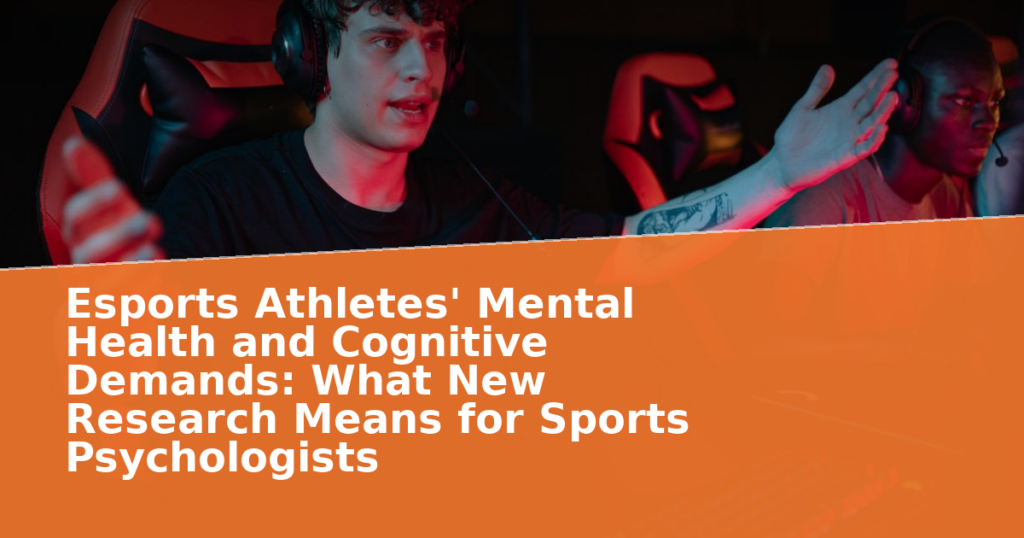
Demand for performance psychology skills is spreading beyond traditional athletics. Esports organizations now employ mental performance consultants to manage cognitive fatigue and team cohesion in competitive gaming. Corporate leadership programs hire performance coaches to strengthen executive presence and decision-making under pressure, an area of sports psychology in corporate wellness. Performing arts conservatories integrate performance psychology into training for musicians, dancers, and actors. The military continues to invest in tactical human performance programs, creating steady demand for consultants who can navigate operational culture. These emerging sectors reward professionals who can adapt sport psychology principles to new populations, and they often bring competitive compensation without requiring clinical licensure.
What Performance Psychologists Actually Earn
Performance psychology graduates enter a field where earnings depend heavily on credential level, work setting, and whether you pursue licensure. The figures below compare two proxy occupations from BLS data alongside median first-year earnings reported by graduates of the programs ranked on this page. Keep in mind that individual outcomes vary widely by sector, with private-practice and elite-sport roles often commanding higher fees than institutional positions.
Frequently Asked Questions About Performance Psychology Programs
Performance psychology is a growing field with multiple entry points, credential options, and career directions. Below are answers to the questions prospective students ask most often, drawn from program details and credentialing standards covered earlier in this guide.
What is the best program for performance psychology?
The answer depends on your goals. For a fully online sports psychology master's program, the University of Western States M.S. in Sport and Performance Psychology is a strong choice because it is an applicant for AASP GPAC accreditation and is designed to meet CMPC educational requirements.2 The University of Illinois Chicago and Dominican University of California are also GPAC applicant programs worth considering. Look for curricula aligned with CMPC coursework standards and supervised practicum hours.
How long does it take to get a degree in performance psychology?
A master's degree typically takes two to three years, while a doctoral program (PhD or Ed.D.) generally requires four to seven years, including a dissertation or doctoral project. Certificate programs can often be completed in under a year. Timeline varies based on enrollment status, practicum requirements, and whether you pursue the degree online or on campus.
Do you need a PhD to be a performance psychologist?
No. Many practitioners enter the field with a master's degree and earn the Certified Mental Performance Consultant (CMPC) credential through AASP. A PhD in sports psychology is required only if you want to become a licensed psychologist, which allows you to diagnose and treat clinical conditions. For non-clinical mental performance consulting, a master's paired with the CMPC is the most common pathway.
What certifications do performance psychologists need?
The primary credential is the CMPC, issued by AASP and accredited by the National Commission for Certifying Agencies (reaccredited effective July 2026). Earning it requires a graduate degree with specified coursework, supervised mentored experience, and passing the CMPC exam.1 If you want to provide clinical services, you will also need state licensure as a psychologist, which requires a doctoral degree plus supervised clinical hours.
Can you complete a performance psychology degree entirely online?
Yes. Several accredited programs now offer fully online master's degrees in sport and performance psychology. The University of Western States, for example, delivers its M.S. and Ed.D. programs online. Online formats often feature asynchronous coursework with synchronous practicum supervision. Rolling admissions are common for online and professional master's programs, making them accessible for working professionals and career changers.
What is the difference between a CMPC and a licensed psychologist?
A CMPC focuses on mental skills training, performance consulting, psychoeducation, and team workshops in non-clinical settings. A licensed psychologist holds a doctoral degree and state licensure, enabling them to diagnose mental health disorders and provide therapy. Some practitioners hold both credentials. If your interest is primarily in optimizing performance rather than treating clinical conditions, the CMPC path may be the better fit.
Are performance psychology certificate programs worth it?
Certificate programs can be valuable for coaches, athletic trainers, or allied professionals who want to add mental performance skills without committing to a full degree. They typically do not satisfy CMPC educational requirements on their own, so they are best viewed as professional development rather than a standalone credential pathway. If you plan to practice independently, a master's degree is the recommended minimum.
Can performance psychologists work outside of sports?
Absolutely. Performance psychology principles apply across high-stakes domains, including military and tactical operations, performing arts, healthcare, corporate leadership, and first responder settings. Graduates increasingly find careers in sports psychology in executive coaching, organizational consulting, and wellness programming. The mental skills toolkit (goal setting, visualization, arousal regulation, and focus training) transfers broadly, making this degree more versatile than its name might suggest.